research
We develop learning and generative systems that are controllable, constraint-aware, steerable, and grounded in the requirements of science and engineering.
I work across three connected themes:
Foundational ML and Generative AI under Constraints
We develop the algorithmic foundations for predictive and generative models whose outputs are not only likely, but feasible, safe, and physically meaningful. This line of work builds on our earlier foundations for differentiable optimization, decision-focused learning, and learning-to-optimize systems, including Lagrangian methods for constrained deep learning (AAAI-20, ECML-20, AAAI-22), end-to-end prediction and optimization (IJCAI-22, JAIR-24, ECAI-24), and differentiable parametric programming and bilevel learning-to-optimize (CDC-24, L4DC-26). We now extend these ideas to constrained continuous diffusion and flow matching (NeurIPS-25a, ArXiv:26a), constrained discrete diffusion and search-augmented masked diffusion (NeurIPS-25b, ArXiv:26b), and constrained code generation and diffusion-based speculative decoding (ArXiv:26c, MLSys-26).
AI for Science and Engineering
We use these foundations to support scientific discovery and engineering design, including inverse design of protein binders (ICLR-26), materials with defects and micro-material design (AI4Mat-25, NeurIPS-24, NeurIPS-25a), safe multi-robot motion planning (ICML-25, AAAI-26), and molecular generation workflows (NeurIPS-25b, ArXiv:26). Our physics-informed and constraint-aware methods have also been used to accelerate energy optimization, operational planning, and scheduling tasks (e.g., AAAI-20, AAAI-22, NeurIPS-21, EPSR-23, NeurIPS-23, ICLR-25).
Responsible AI
We analyze the assurance of AI systems in support of decision-making and learning tasks, focusing especially on privacy, safety, and fairness. Our work has uncovered new theoretical and algorithmic understanding at the intersection of privacy and fairness, including fairness-aware post-processing of private data releases, differentially private and fair learning, and fairness issues in socio-demographic data processes (e.g., IJCAI-21, IJCAI-22, AAAI-21, AAAI-25). We also study how safety and fairness can emerge when machine learning and agentic LLM pipelines are constrained by systems or robustness considerations, including pruning at initialization (NeurIPS-22), hardware failures and deployment choices (ICML-24), and adversarial robustness requirements (IJCAI-24).
For more details, please see our publications and my short bio.
Recorded Talks
Selected talks and tutorials spanning our research foundations and applications.

End-to-End Constrained Optimization Learning
ACP Summer School · 2023
Watch talk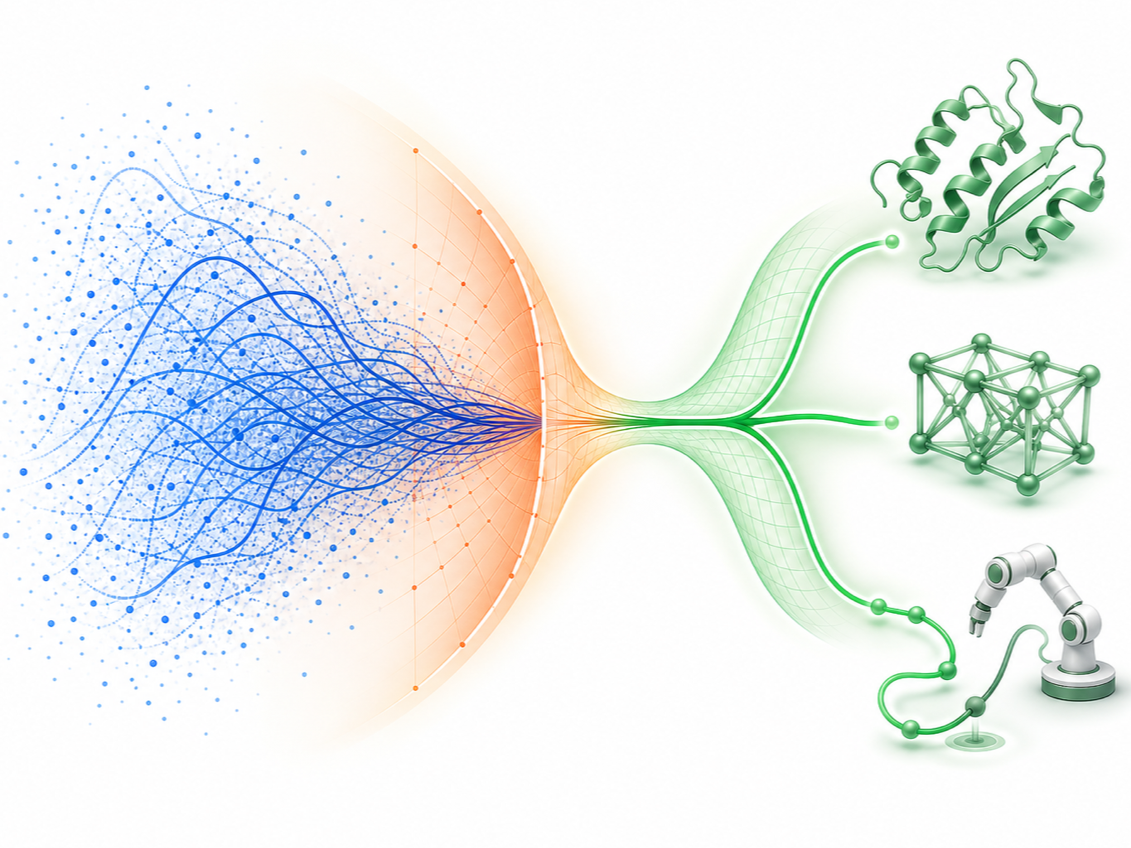
Keynote: Constraint-Aware Generative Models
NeurIPS COML Workshop · 2025
Watch talk
The Principle of Data Minimization in ML
Google TechTalks · 2024
Watch talkMore Recorded Talks
additional recordingsI am looking for self-motivated PhD students, postdocs, and interns!
Students should have a strong background in generative models and optimization and a strong interest in at least one of the following research areas:
- Foundations of constraint-aware generative AI
- GenAI for biology
- GenAI for power systems
- Multiagent systems safety
If you are interested in working with me, please fill out this interest form. After completing the form, you are welcome to reach out by email. I will read all submissions and emails, though I may not be able to reply to each individually.